
Publications & Resources

Videos
The Role of Community Health Workers in Comprehensive Dementia Care
Community Health Workers are increasingly recognized as valuable members of interdisciplinary care teams, helping improve access to care, strengthen community connections, and support individuals living with dementia and their family and friend caregivers.
Videos
Invisible Consequences: How Federal Policy Shapes Economic Security for Older Adults
The webinar explores how legislative changes—especially the Older Americans Act, the Big Beautiful Bill and Social Security adjustments—affect older adults even when they are not the intended policy targets. It also discusses how eligibility rules, documentation requirements and reporting burdens create barriers to benefits such as Medicaid, SNAP, housing and caregiver assistance. Our experts additionally examine how policy shifts influence housing stability, consumer debt (including mortgages and student loans) and caregiving supports, all of which shape real-world access to basic security. Presenters included Benjamin Rose CEO Orion Bell, independent elder justice consultant Judith Kozlowski, and Bob Blancato, the national coordinator of the Elder Justice Coalition and president of Matz, Blancato and Associates.
Videos
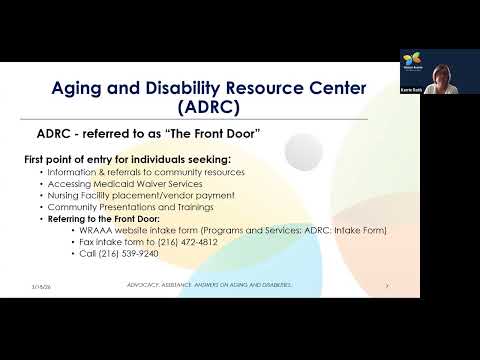
Connecting the Dots: How Community-Based Organizations Strengthen Comprehensive Dementia Care
This informative and timely presentation provides insights into the roles and functions of community-based organizations, including Area Agencies on Aging and multi-service organizations, as well as providers of Adult Day, transportation, respite and home health.
Videos
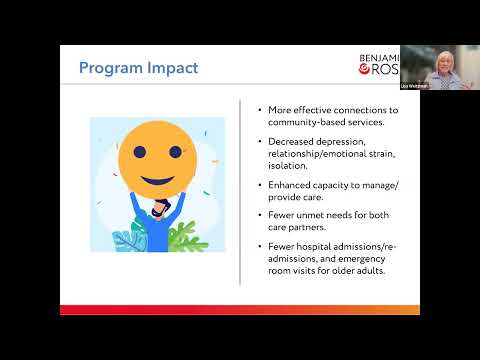
What is Care Navigation and How is it Changing the Landscape of Care for Older Adults?
Everywhere you turn these days it seems there’s more talk about Community Care Navigation, and how health systems are working with community-based organizations to extend their reach outside of their facilities. It’s about time! Care Navigation programs have been around for 20-plus years and proven time and again to decrease healthcare costs through reductions in ER visits, hospital readmissions and physician visits. Plus, they improve patient care!
Publication
Cannon, R. M., Bass, D. M., Powers, S. M., Minyo, M. J., Fete, Z. F., & Huth, M. K. (2025). Healthcare and Community Organizations Implementing Evidence-Based Dementia Caregiving Programs: Findings from Best Programs for Caregiving. The Gerontologist, 65, gnaf059. https://doi.org/10.1093/geront/gnaf059
Publication
Minyo, M. J., Powers, S. M.,Bass, D. M., Cannon, R. M., Maslow, K., Fete, Z. F., & Huth, M. K. (2025). Programmatic research outcomes used to establish the evidence-based of dementia caregiving support programs: An analysis of Best Programs for Caregiving. Alzheimer’s & Dementia: Translational Research & Clinical Interventions,11, e70092. https://doi.org/10.1002/trc2.70092

Videos
Care-Based Estate Planning for Families Living with Dementia
Estate planning is necessary and provides peace of mind, but wills, trusts and powers of attorney can all seem terribly complicated and intimidating to many families. This valuable webinar provides professionals and family caregivers with practical guidance on estate planning, Medicaid rules, and long-term care funding strategies tailored to families living with dementia.

Videos
Everything You Need to Know About the CMS GUIDE Model and How AAAs Can Get Involved
Join us for an information-filled virtual presentation specifically about features, benefits and details of the national GUIDE rollout. This presentation, followed by Q&A, includes an overview of CMS’ goals in developing GUIDE, a review of the 9 required elements of GUIDE delivery, as well as the unique role that providers of older-adult services and healthcare organizations can play in the process.

Videos
19th Annual Katz Policy Lecture: Advancing Dementia Caregiving
The 19th annual Katz Policy Lecture examines groundbreaking research and innovations in dementia care. Dr. David Reuben, Archstone Professor at UCLA and leading expert on aging and dementia care, discusses comprehensive dementia care, provides updates on the Guiding an Improved Dementia Experience (GUIDE) payment model, and presents findings from the Dementia-Care Study (D-CARE), Lastly, Dr. Reuben highlights future directions in dementia care policy and research.